Web platforms and products

Some software has to carry the business: the portal customers log into, the platform staff live in all day, the product that is the company. We build these on boring, durable foundations, with the data model designed before the screens, so they keep working as the business changes.

Typical engagements

  • A customer or partner portal that replaces email, spreadsheets, and phone tag
  • An operations platform for scheduling, orders, or job tracking with roles and audit trails
  • A web product taken from prototype to something you can charge for

What you get

  • A working platform on infrastructure you own, with the code in your repository
  • Authentication, roles, and audit logging where money or records are involved
  • A documented data model and an admin surface your staff can actually use
  • A care plan so it keeps working after launch

Automation and integrations

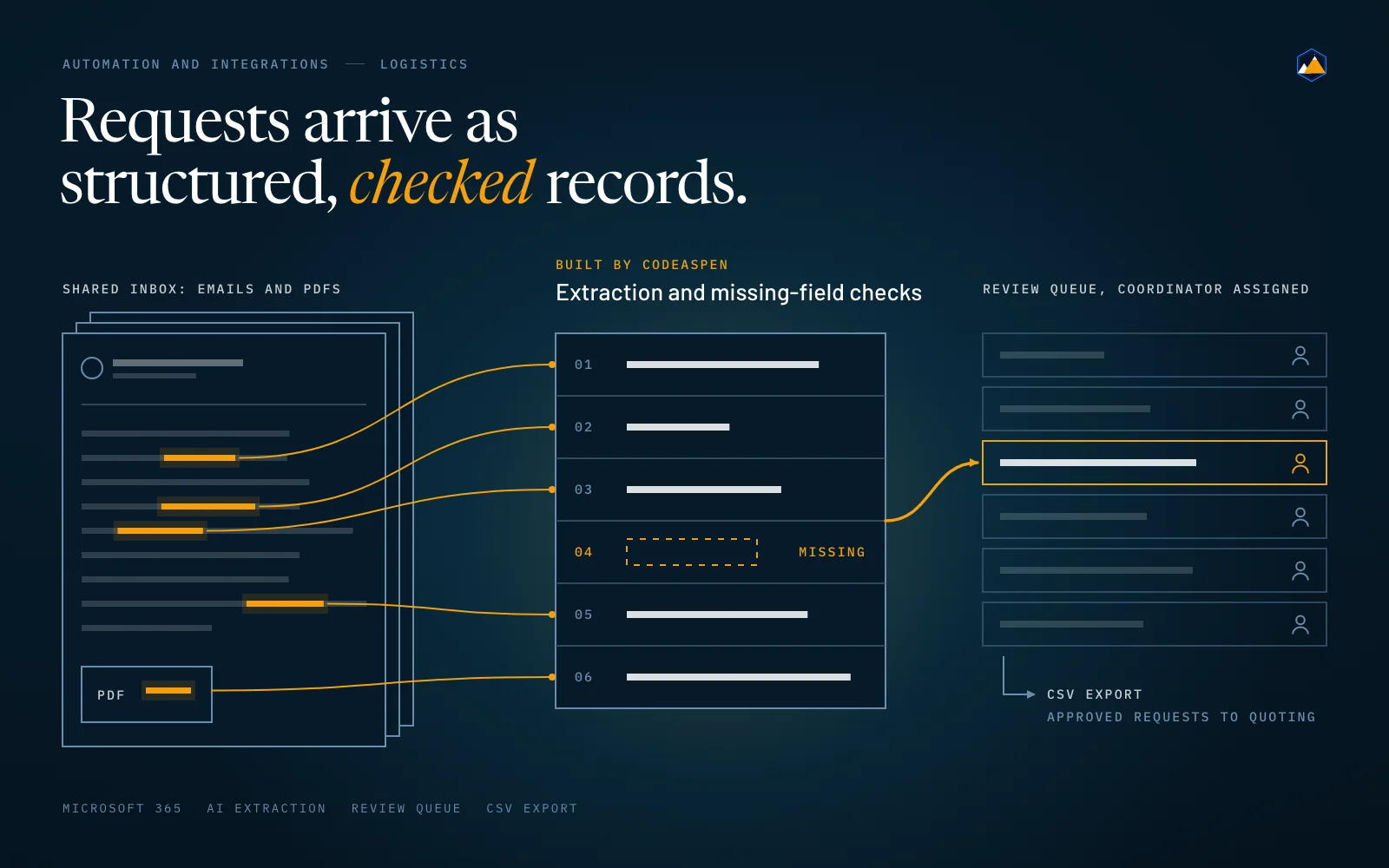
Most operations run on three or four systems that were never introduced to each other, joined by inboxes and copy-paste. We connect them: intake from email, forms, and phone into the CRM; approvals routed to the right person; records exported where finance needs them. Quietly, on a schedule, with a log.

Typical engagements

  • Request intake from a shared inbox into a queue with assignment and exports
  • CRM, scheduling, and accounting systems synced through their APIs
  • A back-office process (quotes, onboarding, reporting) run end to end without manual steps

What you get

  • Integrations built on the vendor APIs, not screen scraping
  • A review queue for anything that needs a human decision
  • Event logs and alerts so failures are visible the day they happen
  • Runbooks for the people who operate it

Data and internal tools

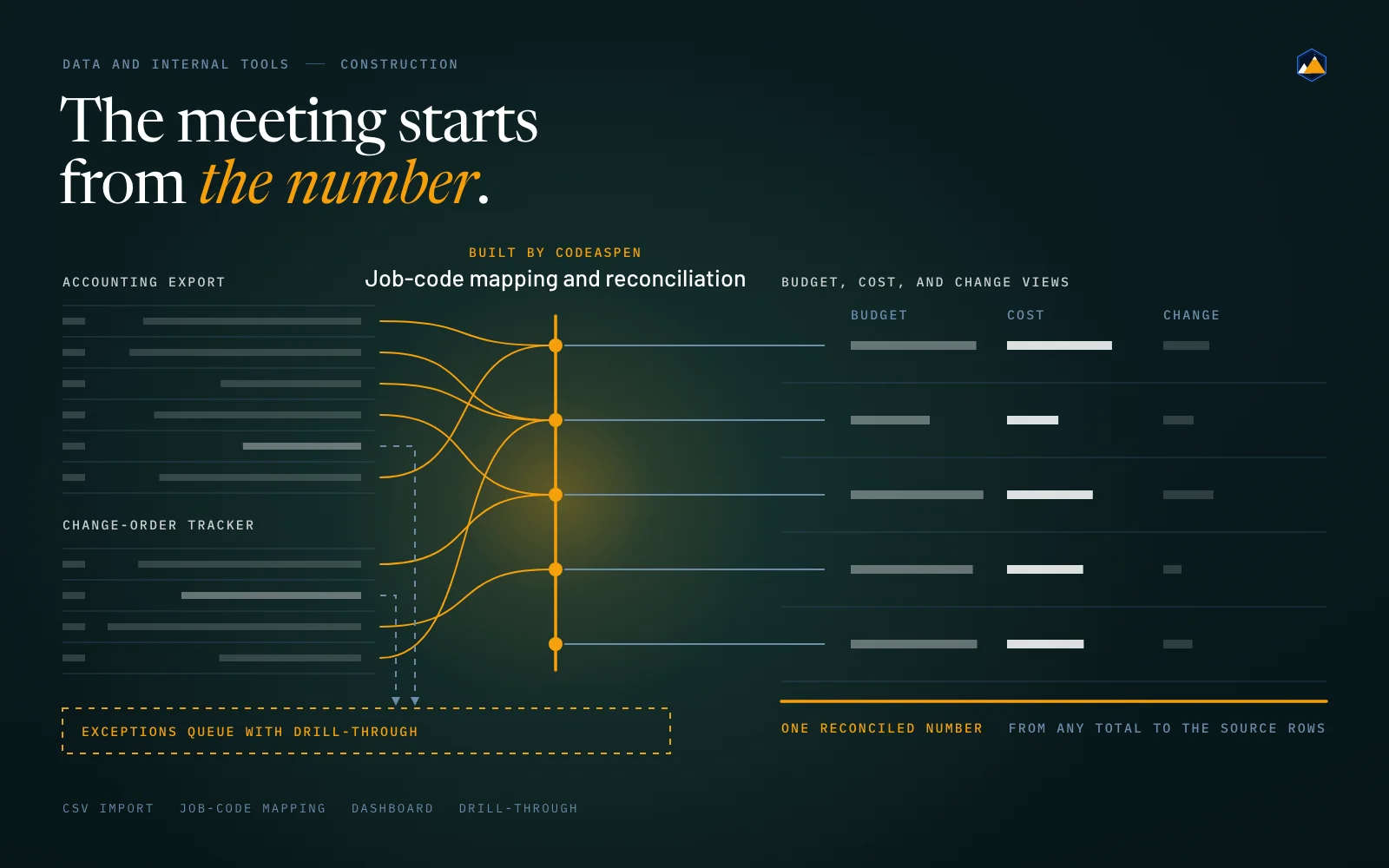
When finance has one export, operations has another, and the weekly meeting is spent checking the spreadsheet, the problem is not reporting. It is that nobody reconciled the sources. We build the pipeline, the agreed mappings, the exceptions list, and the internal tool that lets a manager click from a total to the rows behind it.

Typical engagements

  • Reconciling two or more systems into one report with an exceptions queue
  • A pipeline that ingests exports and feeds a dashboard on a schedule
  • An internal tool for a workflow that has outgrown its spreadsheet

What you get

  • A data model with agreed mappings and freshness timestamps
  • Drill-through from every total to its source records
  • Scheduled ingestion with validation and failure alerts
  • Dashboards built for decisions, not decoration

AI features and assistants

AI belongs in the parts of a workflow where reading, sorting, and drafting eat hours, and it belongs behind a review step wherever the answer costs money. We add it there: extracting fields from documents, triaging requests, answering routine questions, capturing and booking leads. The assistant on this site is one we built for ourselves and run in production.

Typical engagements

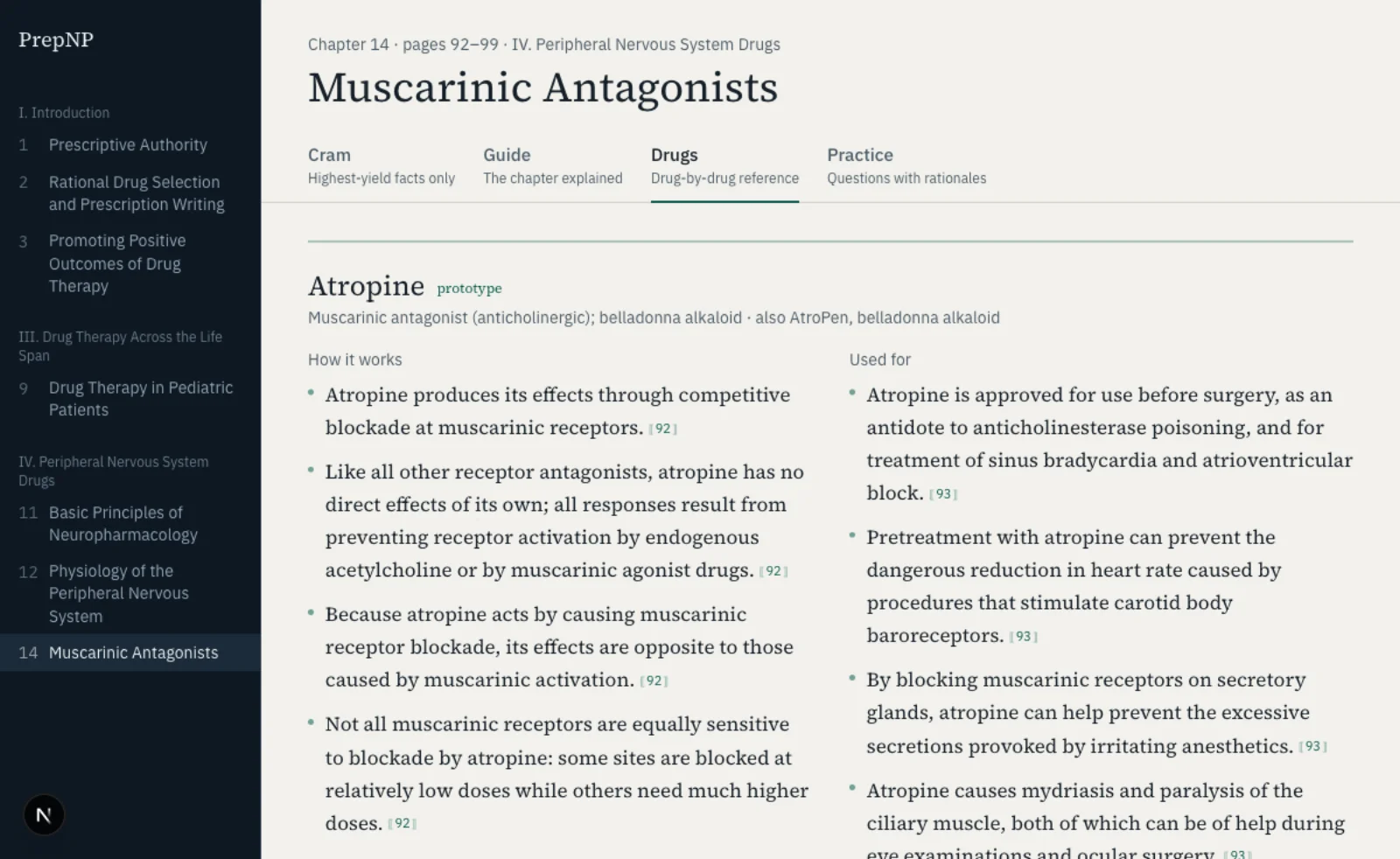
  • Document and email extraction feeding a review queue with the source beside every field
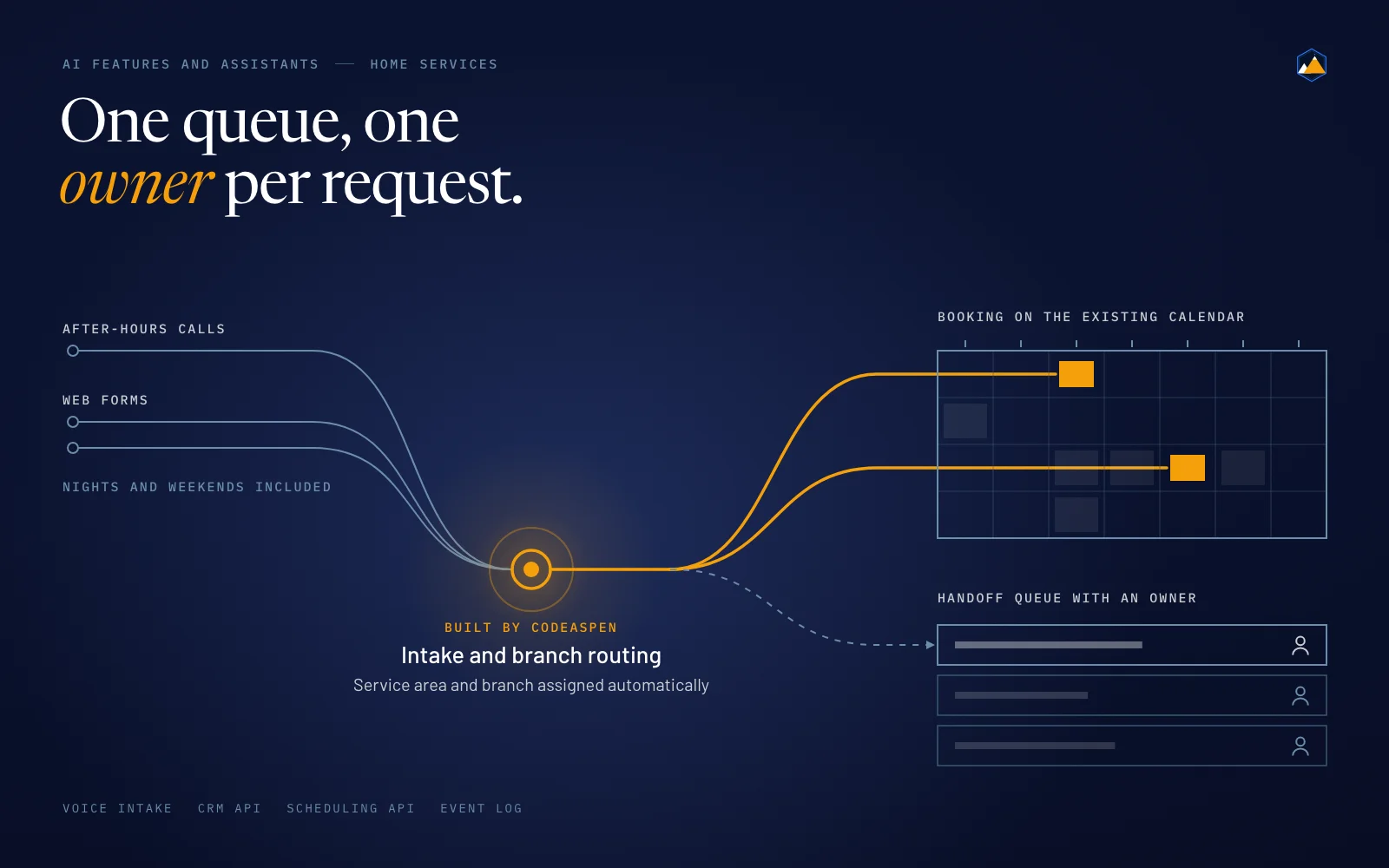
  • A lead response and booking system that captures, qualifies, and schedules inquiries around the clock
  • An internal assistant grounded in your own documents, with permissions and an audit trail

What you get

  • Evaluation on your real documents before anything reaches customers
  • Human review wherever a wrong answer has a cost
  • Permissions, logging, and rate limits from day one
  • Monitoring and tuning under the care plan

How engagements work

Two ways to work together.

Fixed-scope build with a care plan

Most work starts here. We scope it with you, price it upfront, build it in milestones, and hand it over with the code in your repository. The care plan keeps it monitored, patched, and tuned after launch, with a monthly note on what changed.

  • Fixed scope and fixed price, agreed before work starts
  • Milestones you can see and test as they land
  • You own the code and the accounts
  • Care plan for monitoring, fixes, and tuning after launch

Engineering partnership

For companies with a roadmap, not a single project. A fixed monthly capacity from the same team, planned quarter by quarter, so the next integration, report, or feature never waits for a new proposal.

  • Fixed monthly capacity, planned with you each quarter
  • One team across every system we have built for you
  • Priorities reset monthly, no new proposal per item
  • Includes the care plan for everything already live

In their words

What a client said.

“The branch managers couldn’t see which requests still needed a response, even though we were paying to generate those leads.”

Operations Director, multi-location HVAC and plumbing companyRead the case

Common questions

Before the call.

How does pricing work?
Every build is scoped and priced upfront: fixed scope, fixed price, agreed in writing before work starts. The scoping call is where we map your situation to a number. We do not publish rates because two projects with the same name are rarely the same size.
How long does a project take?
Integrations and internal tools usually land in six to eight weeks. Platforms and products run longer and ship in milestones you can test as they land. Every scope includes a real timeline, not a range you have to decode.
Who actually does the work?
Daniyal scopes and leads every build and is on every call. Delivery is a small senior team working under that scope, so the person who understood your problem is the person accountable for the result.
What is the care plan?
Monitoring, fixes, and tuning after launch, with a monthly note on what changed. It is how a build stays worth keeping once the launch excitement is over. Every fixed-scope build includes one.
Do we need to know exactly what we want?
No. Bring the problem, not the solution. The scoping call exists so we can find out whether the thing you came in asking for is the thing you actually need, before a proposal goes out.
Can you work with the systems we already run?
Almost always. Most projects start with a CRM, an accounting system, a scheduling tool, and a shared inbox that were never introduced to each other. The work is connecting them and adding what is missing.

You dream, we deliver.

Bring us the problem. We’ll scope the fix.

A 20-minute scoping call: what you have, what is breaking, and what a fixed-scope build would look like. If it is not a fit, you will know by the end of the call.

Reply within one business day · Houston, Texas