

Houston software studio
The software your business runs on.
Web platforms, automations, internal tools, and AI features. Scoped and led by the founder, delivered by a small senior team.
- For
- Operations, finance, and owner-led teams across the US
- Price
- Fixed, in writing, before work starts
- Code
- Yours, in your repository from the first commit
- After launch
- A care plan with a monthly note
What we build
Four practices, one team.
Most engagements touch two of these. We scope the actual work, not the category.
Web platforms and products
Customer portals, internal platforms, and products built to run for years, not to demo once.
Typical engagements
- A customer or partner portal that replaces email, spreadsheets, and phone tag
- An operations platform for scheduling, orders, or job tracking with roles and audit trails
- A web product taken from prototype to something you can charge for
Automation and integrations
Connect the systems you already run so work moves without someone retyping it.
Typical engagements
- Request intake from a shared inbox into a queue with assignment and exports
- CRM, scheduling, and accounting systems synced through their APIs
- A back-office process (quotes, onboarding, reporting) run end to end without manual steps
Data and internal tools
Pipelines, reconciliations, and dashboards that show one number everyone trusts.
Typical engagements
- Reconciling two or more systems into one report with an exceptions queue
- A pipeline that ingests exports and feeds a dashboard on a schedule
- An internal tool for a workflow that has outgrown its spreadsheet
AI features and assistants
Extraction, review queues, and assistants added where they earn their keep.
Typical engagements
- Document and email extraction feeding a review queue with the source beside every field
- A lead response and booking system that captures, qualifies, and schedules inquiries around the clock
- An internal assistant grounded in your own documents, with permissions and an audit trail
Selected work
We build software for operators and owners.
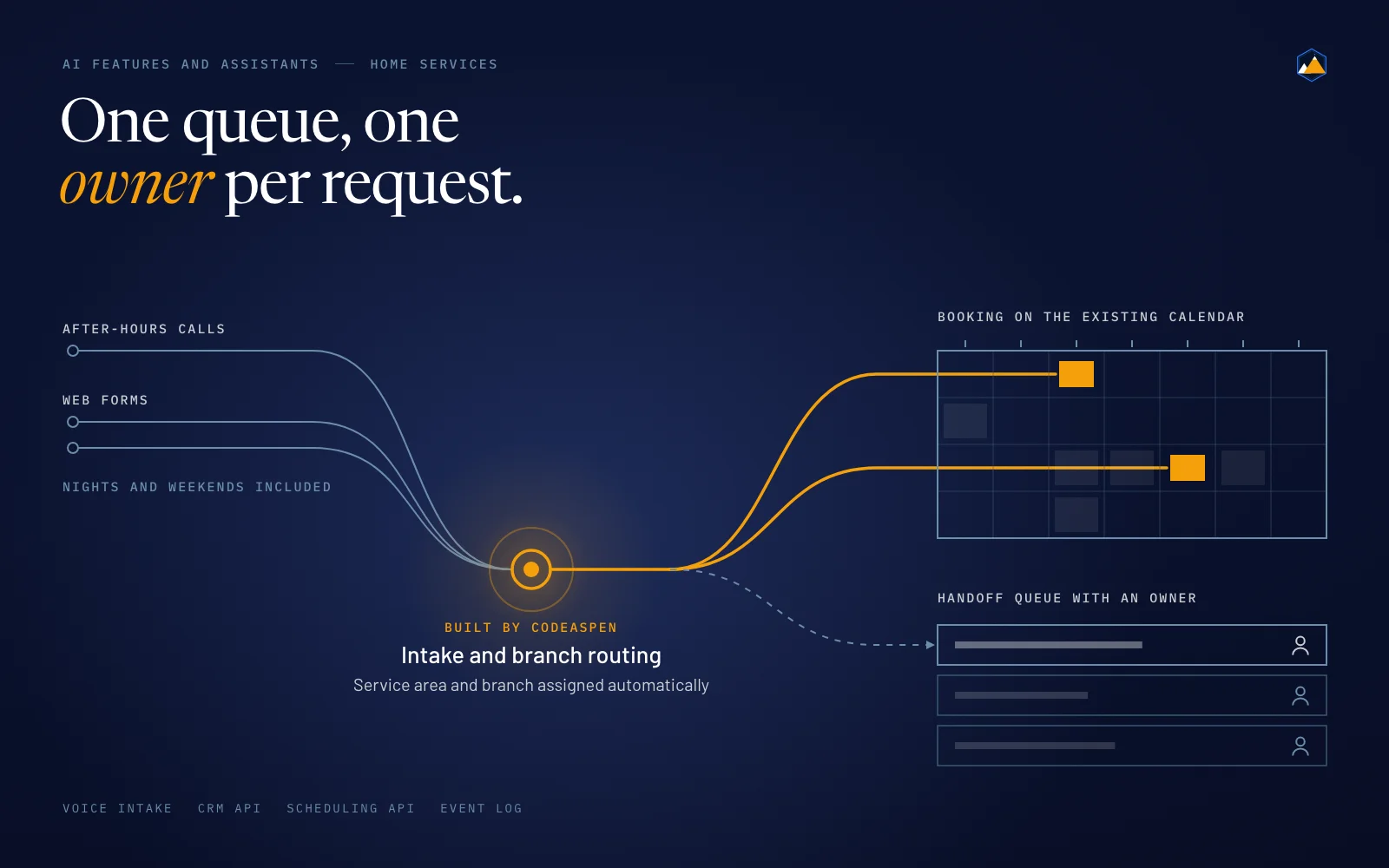
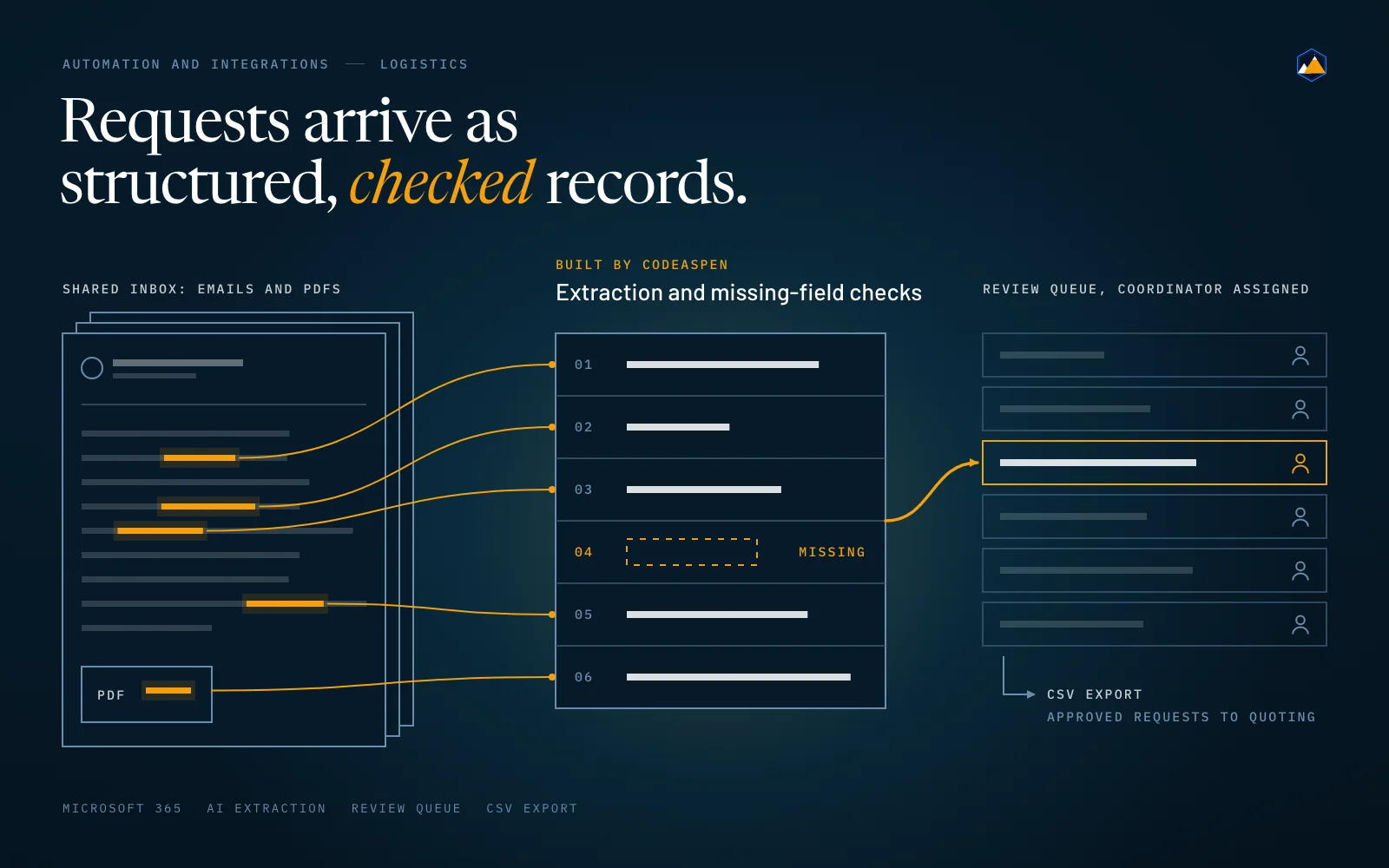
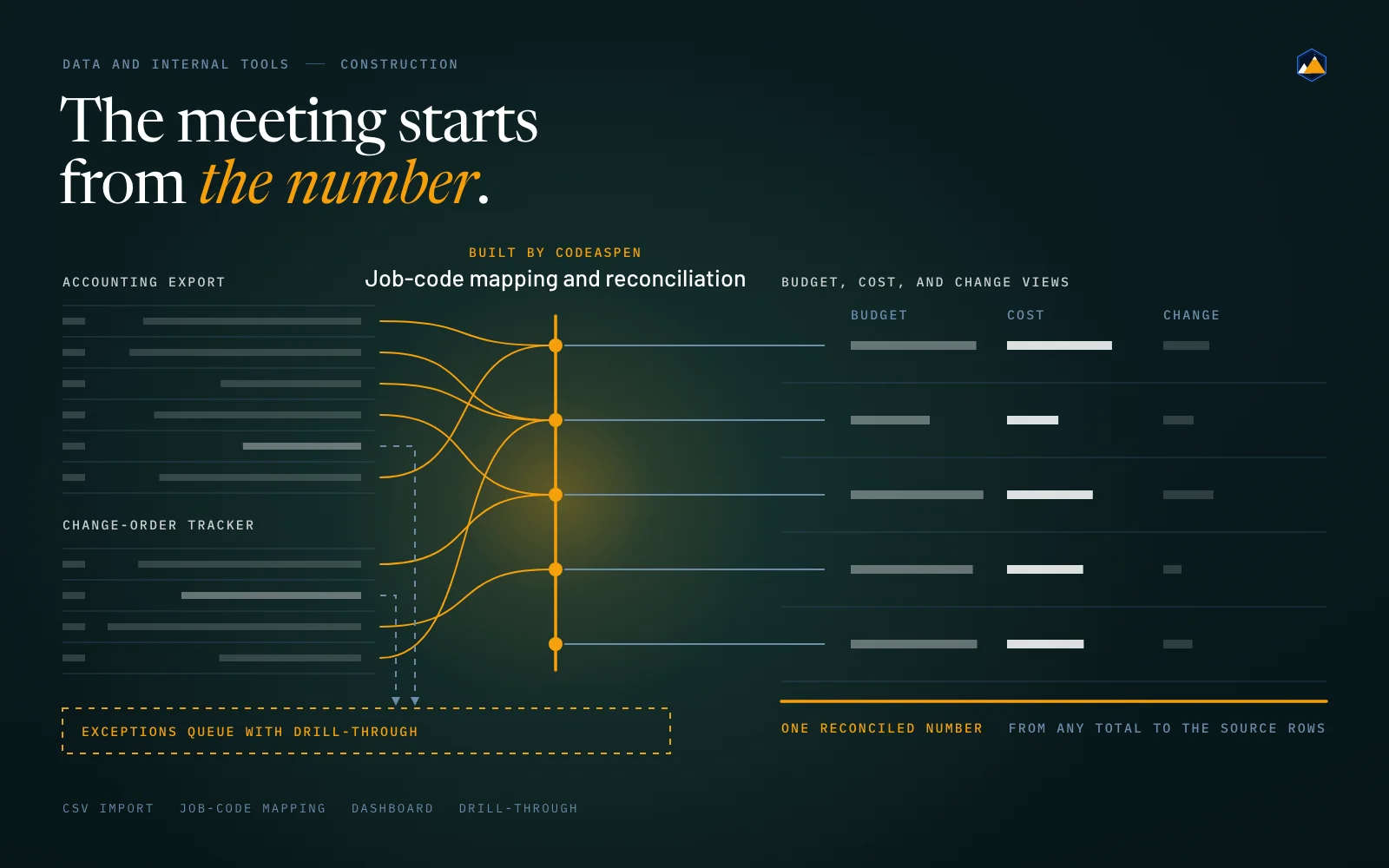
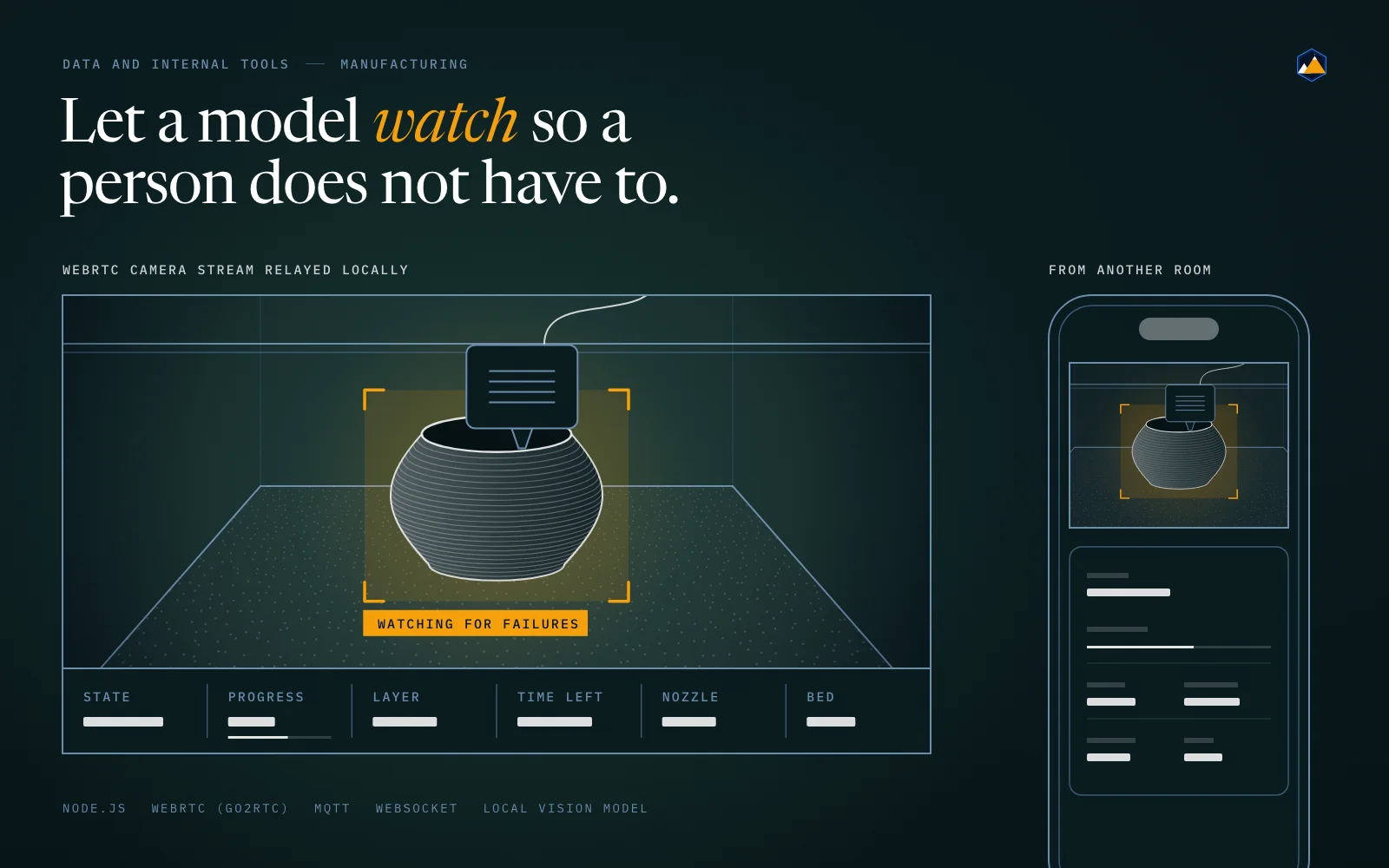
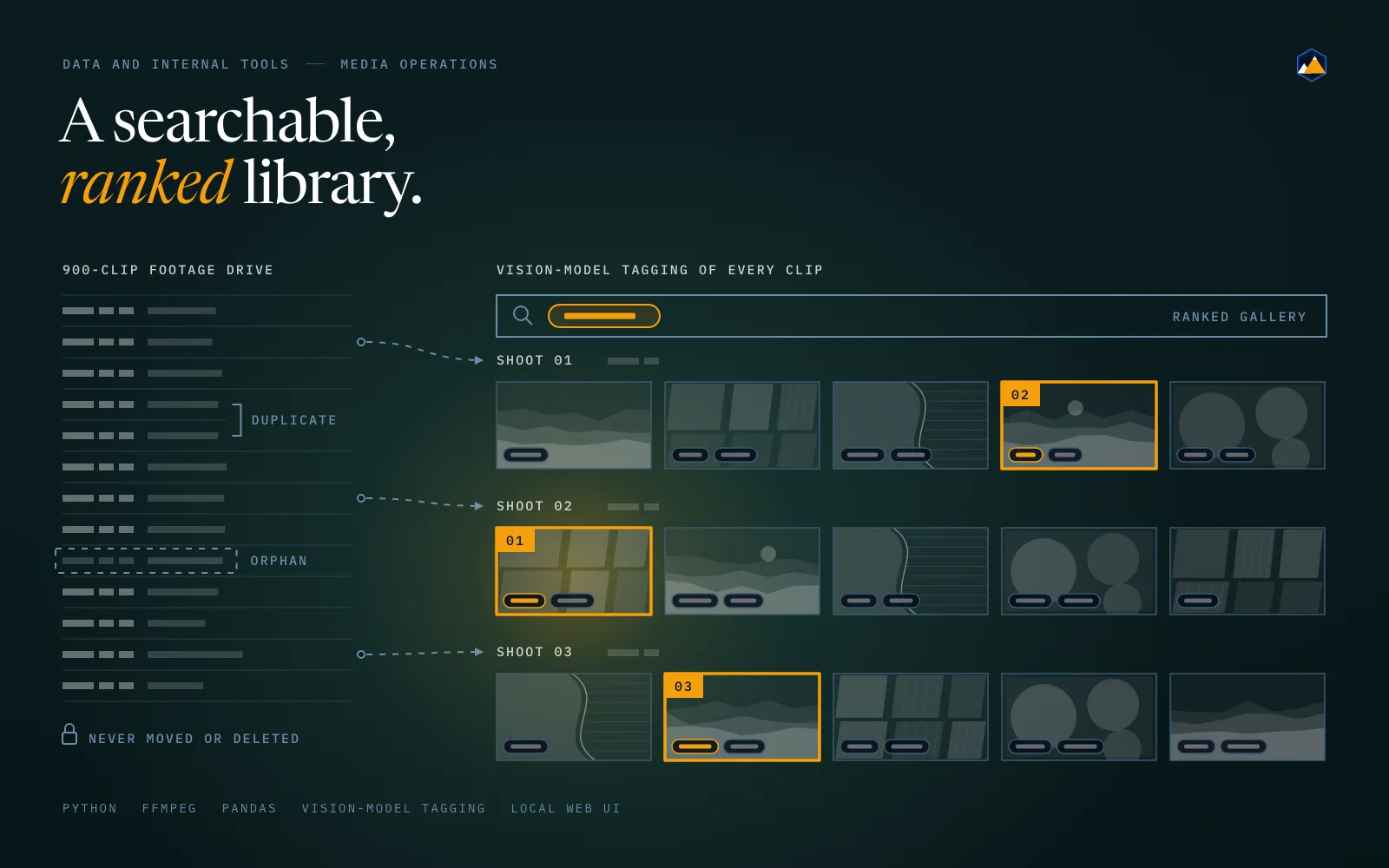
A selection of client engagements and the studio’s own systems. Client names withheld where the engagement calls for it.
How we work
Scope it, build it, keep it running.
Three stages, each ending in something you can hold: a written scope, working software, a monthly note. I scope and lead every build.
-
01 Scope
Fixed scope, fixed price
We map what you have, what is breaking, and what a build would look like. You get the scope and the price in writing before any work starts.
-
02 Build
Milestones you can test
The work lands in pieces you can see and use, on infrastructure you own, with the code in your repository from the first commit.
-
03 Care plan
Kept running
After launch, the care plan keeps it monitored, patched, and tuned against real traffic, with a monthly note on what changed and why.
Why CodeAspen
The difference is who builds it.
How the alternatives typically work, side by side.
 CodeAspen
 | Compared on | CodeAspen | Typical agency | Freelancer | Off-the-shelf software |
|---|---|---|---|---|
| Who you work with | The founder scopes and leads every build. A small senior team delivers it. | An account manager, with the build handed to whoever is free. | One person, for as long as they are available. | A support queue. |
| Who owns the code | You do, in your repository from the first commit. | Often the agency until the final invoice clears. | Usually you, if the handoff happens. | The vendor. You rent access. |
| How the price is set | Fixed scope and fixed price, agreed in writing before work starts. | An estimate that grows with change orders. | Hourly and open-ended. | Per seat, every month, for as long as you use it. |
| After launch | A care plan: monitoring, fixes, tuning, and a monthly note on what changed. | A new statement of work. | Whatever their next project leaves room for. | Their roadmap, not yours. |
| Production standards | Permissions, logging, tests, and alerts from day one. | Depends on who is staffed on the project. | Depends on the person. | Built for the average customer. |
| How AI is used | Where it removes hours, behind a review step wherever a wrong answer costs money. | Often as the headline. | Depends on the person. | Bundled features you cannot shape. |
Live proof
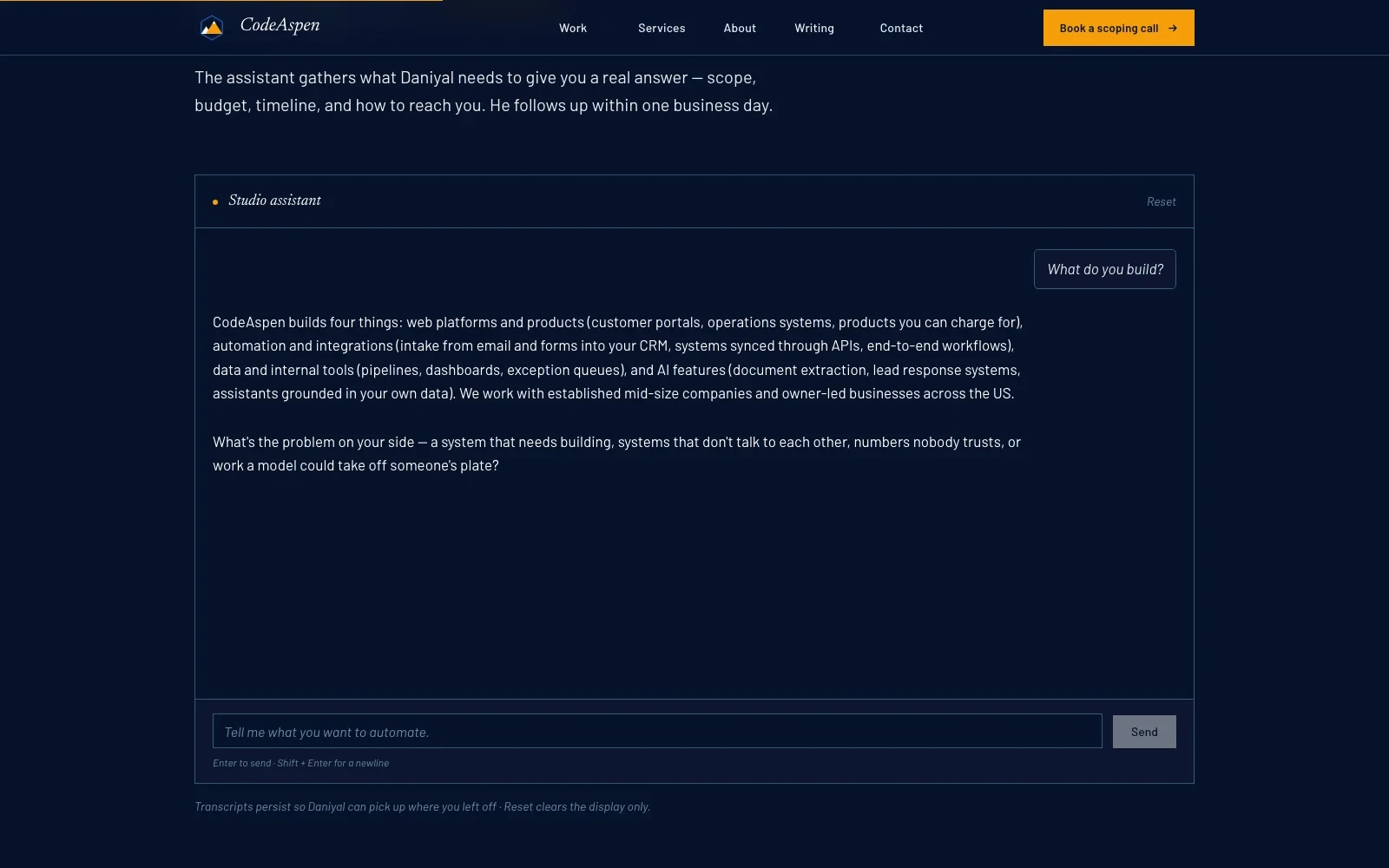
The assistant we built for ourselves.
Ask it anything about how we work. It is the same kind of AI feature we ship to clients, and it runs in production on every page of this site.
In their words
What a client said.
“When job codes or totals didn’t line up, we spent the meeting checking the report instead of deciding what needed attention.”

A note from the founder
Eight years building data systems for underwriting, healthcare operations, and Fortune 100 litigation taught me one thing: the systems that matter are the ones that keep working when nobody is watching.
I’m Daniyal. The scoping call is with me, the plan is mine, and I sign my name to the result.
Daniyal Nathani · Founder · Houston, Texas
Writing
Notes from the work.
-
Custom software, an iOS app, or a better setup of what you already own?
The task decides the platform. How I compare an existing tool, a small custom web layer, and a native iOS build, plus the cost of owning each one. -
If we rebuild your website, what should get better?
How I tie design, SEO, speed, and lead handling to an agreed definition of a qualified inquiry and a measurement plan a business can actually use. -
The AI demo works. I still have questions before we ship.
Before an AI feature reaches customers, I want the permission boundaries, the evaluation set, the review queue, and the recovery plan settled.
You dream, we deliver.
Software worth keeping.
A 20-minute scoping call: what you have, what is breaking, and what a fixed-scope build would look like.
Reply within one business day · Houston, Texas